

2027 CVC Course Design Rubric
What's New?
The 2027 CVC Course Design Rubric builds on the strengths of the current rubric while modernizing the framework to support today's online learning environment.
Many core expectations remain the same. Faculty will still find familiar concepts related to course organization, instructor presence, assessment, learner support, and accessibility. The updated rubric reorganizes these concepts and introduces new areas that reflect evolving regulations, technologies, and student needs.
The result is a rubric that places greater emphasis on equity, accessibility, learner engagement, student support, and meaningful learning experiences while remaining grounded in quality course design.
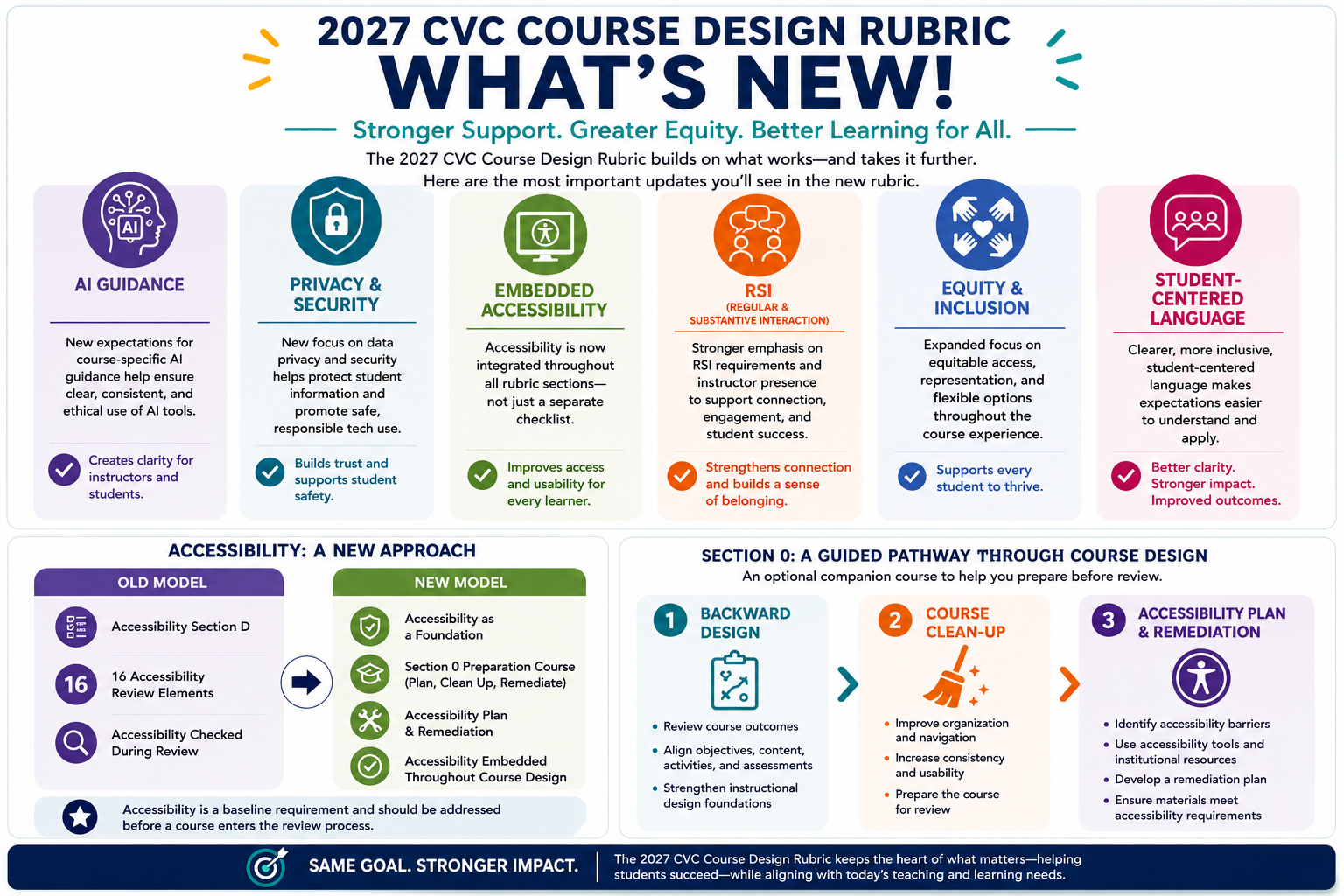
Current Rubric
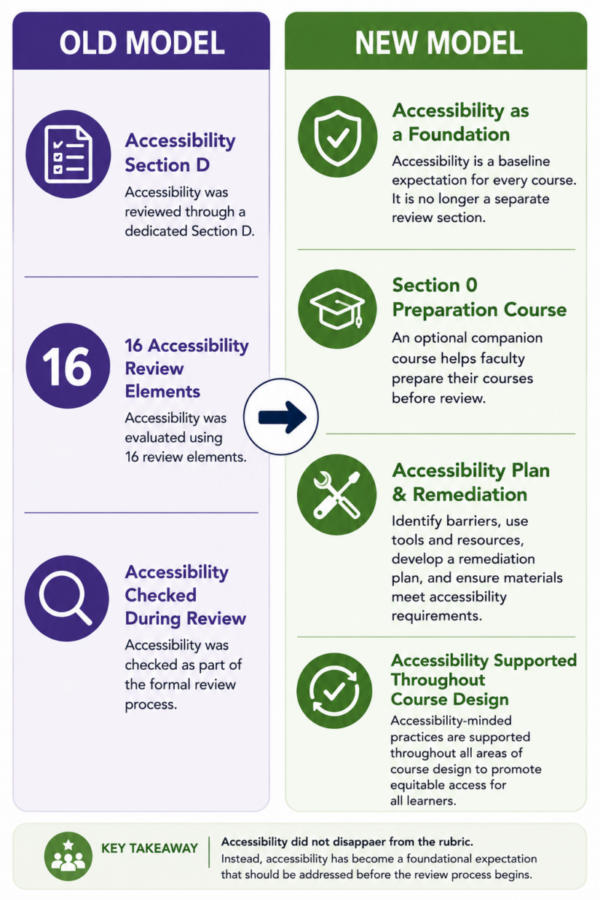
Accessibility was reviewed through a dedicated Section D that included 16 accessibility review elements.
2027 CVC Course Design Rubric
Accessibility is no longer a standalone rubric section.
Because digital accessibility is now a federal and state requirement that applies to all instructional materials and digital resources, accessibility is treated as a foundational expectation rather than an online course design standard.
The rubric includes accessibility-minded design practices throughout the review process, but it is not intended to function as a comprehensive accessibility compliance checklist.
What Changed?
The focus has shifted from:
Checking accessibility during review
to
Preparing accessible courses before review.
Accessibility should be addressed through institutional accessibility processes, accessibility tools, and remediation efforts before a course enters formal review.
Section 0: A Guided Pathway Through Course Design
To support faculty, the 2027 CVC Course Design Rubric includes an optional companion resource:
Section 0: A Guided Pathway Through Course Design
This adoptable course helps faculty prepare their courses before review.
Step 1: Backward Design
- Review course outcomes
- Align objectives, content, activities, and assessments
- Strengthen instructional design foundations
Step 2: Course Clean-Up
- Improve organization and navigation
- Increase consistency and usability
- Prepare the course for review
Step 3: Accessibility Plan & Remediation
- Identify accessibility barriers
- Use accessibility tools and institutional resources
- Develop a remediation plan
- Ensure course materials meet accessibility requirements
Key Takeaway
Accessibility did not disappear from the rubric.
Instead, accessibility has become a foundational expectation that should be addressed before the review process begins.
Current Rubric
The current rubric does not contain a dedicated AI element.
2027 CVC Course Design Rubric
The rubric now includes a dedicated AI element focused on transparent communication and student success.
What Changed?
Faculty are encouraged to clearly communicate:
- Whether AI is permitted
- How AI may be used
- When AI use is prohibited
- How AI supports learning within the course
The rubric does not prescribe a specific AI policy.
Instead, it encourages instructors to develop course-specific guidance aligned with their learning outcomes and disciplinary expectations.
Key Takeaway
Students should understand how AI fits within the course and what responsible use looks like.
Current Rubric
Privacy and security were not explicitly addressed within the rubric.
2027 CVC Course Design Rubric
A new element focuses on student data privacy, security, and responsible technology use.
What Changed?
Courses should:
- Link to institutional privacy policies
- Help students understand safe technology use
- Explain how information may be collected and protected
- Promote responsible use of digital tools
Key Takeaway
Students deserve clear information about the technologies they use and how their data is protected.
Current Rubric
Interaction expectations were addressed through instructor contact and student interaction elements.
2027 CVC Course Design Rubric
A dedicated RSI section aligns more closely with federal and accreditation expectations.
What Changed?
Greater emphasis is placed on:
- Instructor presence
- Instructor-initiated communication
- Meaningful interaction
- Student belonging
- Transparent communication expectations
The focus is not simply interaction, but interaction that supports learning.
Key Takeaway
RSI is central to quality online teaching and student success.
Current Rubric
Some equity-minded practices were present but not consistently emphasized.
2027 CVC Course Design Rubric
Equity and inclusion are intentionally embedded throughout the rubric.
What Changed?
The rubric encourages:
- Representation of diverse perspectives
- Inclusive learning experiences
- Flexible learning pathways
- Equitable access to technology and resources
- Support for learner variability
Rather than existing in a single section, equity considerations are woven throughout the entire course design process.
Key Takeaway
Equity is not an isolated requirement. It is a design principle that influences the entire course experience.
Current Rubric
Many elements supported student success but often emphasized compliance and structure.
2027 CVC Course Design Rubric
The updated rubric places greater emphasis on how students experience the course.
What Changed?
The rubric encourages:
- Clear communication
- Transparent expectations
- Consistent navigation
- Embedded support resources
- Opportunities for reflection and growth
Key Takeaway
The focus shifts from what instructors provide to how students experience learning.
Current Rubric
Assessment focused primarily on alignment, instructions, rubrics, and feedback.
2027 CVC Course Design Rubric
Assessment expectations have expanded to support engagement, reflection, and authentic learning.
What Changed?
The rubric now emphasizes:
- Variety of assessment methods
- Formative and summative assessment
- Learner self-reflection
- Anonymous learner feedback
- Clear feedback processes
- Inclusive assessment design
Key Takeaway
Assessment is viewed as a tool for learning, not simply a tool for evaluation.
While the rubric has evolved, many foundational expectations remain the same.
The 2027 CVC Course Design Rubric continues to emphasize:
- Clear course organization
- Aligned learning outcomes
- Meaningful instructor presence
- Quality assessment practices
- Student support resources
- Accessible course design
- Student engagement
The updated rubric builds on these foundations while reflecting current regulations, emerging technologies, and evolving best practices in online teaching and learning.
Same Goal. Stronger Impact.
The 2027 CVC Course Design Rubric continues to support high-quality online learning while helping colleges address emerging expectations related to accessibility, equity, AI, privacy, and student success.
