

Privacy & Security in the 2027 CVC Course Design Rubric
Digital technologies play an increasingly important role in teaching and learning. As instructors adopt new tools, applications, and online resources, students may be asked to create accounts, share information, or interact with third-party technologies as part of their learning experience.
The 2027 CVC Course Design Rubric introduces a dedicated Privacy & Security element to support transparency and informed decision-making regarding the technologies used within a course.
The goal is not to restrict innovation or limit instructional tools. Instead, the rubric encourages instructors to help students understand how technologies are used and where they can find information about privacy and security practices.
By providing clear information about required technologies and available resources, instructors can help students navigate digital learning environments with greater confidence and awareness.
Supporting Informed Technology Use
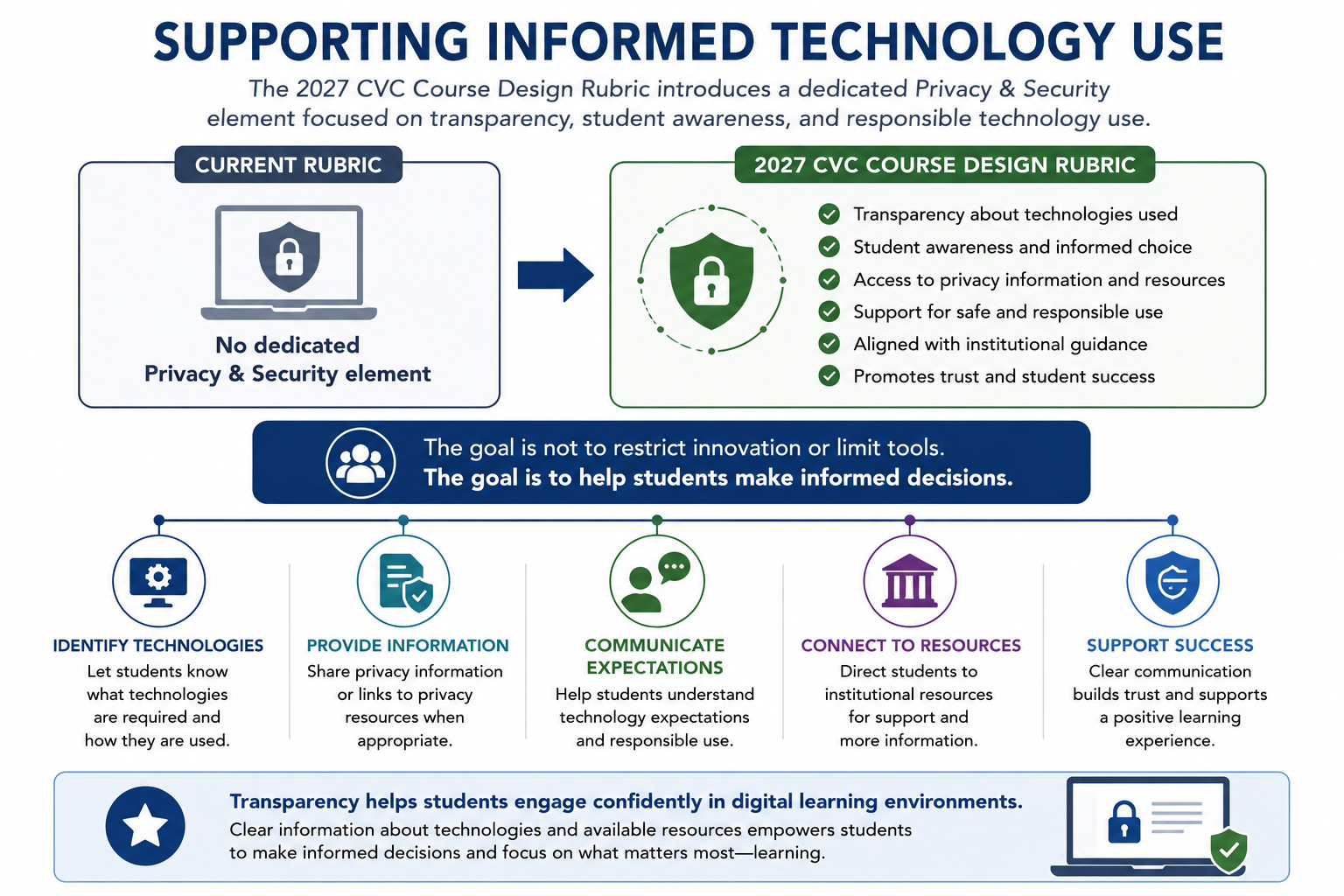
Current Rubric
The current rubric does not contain a dedicated Privacy & Security element.
2027 CVC Course Design Rubric
The rubric now includes a dedicated element focused on student data privacy, security, and responsible technology use.
What Changed?
As technology use expands, students may be asked to:
- Create accounts
- Share personal information
- Use third-party applications
- Access cloud-based tools
- Engage with online services
The rubric encourages instructors to provide information that helps students make informed decisions about the technologies used in the course.
Key Takeaway
Students should understand what technologies they are using and where they can find information about privacy and security practices.
The rubric encourages instructors to provide transparency regarding technologies used within the course.
This may include:
- Identifying required technologies
- Providing links to privacy information when appropriate
- Helping students understand technology expectations
- Directing students to institutional resources
- Supporting informed technology use
The focus is helping students understand the technologies that support their learning experience.
Key Takeaway
The emphasis is transparency and awareness rather than technical expertise.
The 2027 CVC Course Design Rubric does not:
- Require instructors to become privacy experts
- Require legal analysis of technology tools
- Require a specific privacy statement
- Require the use or avoidance of particular technologies
- Replace institutional approval processes
Institutions maintain responsibility for evaluating and approving instructional technologies according to local policies and procedures.
Key Takeaway
The rubric encourages communication and student awareness, not legal compliance reviews.
Students benefit when they understand:
- What technologies are required
- Why technologies are being used
- What information may be shared
- Where they can find additional information
- Who to contact with questions
Providing this information can help students navigate technology choices more confidently and responsibly.
Key Takeaway
Clear communication supports trust, transparency, and student success.
Important Note
The examples below are provided for illustrative purposes only.
They are intended to demonstrate ways instructors may communicate information about technologies used within a course. These examples are not required language, recommended language, or institutional policies.
Institutions and instructors should develop guidance that aligns with local policies, approved technologies, and student needs.
Example Approach: Technology Information
An instructor provides a list of required technologies and explains how each tool supports learning activities within the course.
Example Approach: Privacy Information
An instructor provides links to privacy information or institutional guidance for technologies that require student accounts.
Example Approach: Student Support
An instructor directs students to institutional resources that can answer questions related to technology use, privacy, or security.
Key Takeaway
There are many ways to support transparency and informed technology use within a course.
Technology is an essential part of modern learning environments. When students understand the technologies used within a course and have access to information that supports informed decision-making, they are better equipped to engage confidently with course activities and resources.
Providing clear information about technology expectations can help reduce confusion, increase trust, and support a more positive learning experience.
Key Takeaway
Transparency helps students focus on learning rather than navigating uncertainty about technology requirements.
Frequently Asked Questions
No. The rubric encourages transparency and student awareness but does not prescribe specific language.
No. The rubric does not require a specific implementation approach. Instructors should follow institutional guidance regarding approved technologies and available resources.
No. Technology approval decisions remain the responsibility of individual institutions.
No. The rubric focuses on communication and student awareness rather than technical or legal expertise.
Faculty should continue to follow institutional guidance regarding approved technologies, privacy practices, and security requirements.
No. The rubric is focused on transparency and helping students understand the technologies used within the course. Institutional policies and processes remain responsible for technology evaluation and compliance considerations.
Transparency Builds Trust
The 2027 CVC Course Design Rubric encourages instructors to help students understand the technologies used within a course and where they can find information that supports informed and responsible technology use. By providing clear expectations and access to resources, instructors can help students engage confidently in digital learning environments.
