

Universal Design for Learning (UDL) and the 2027 CVC Course Design Rubric
Universal Design for Learning (UDL) is a framework that helps educators design learning experiences that anticipate learner variability and reduce barriers to learning before they occur.
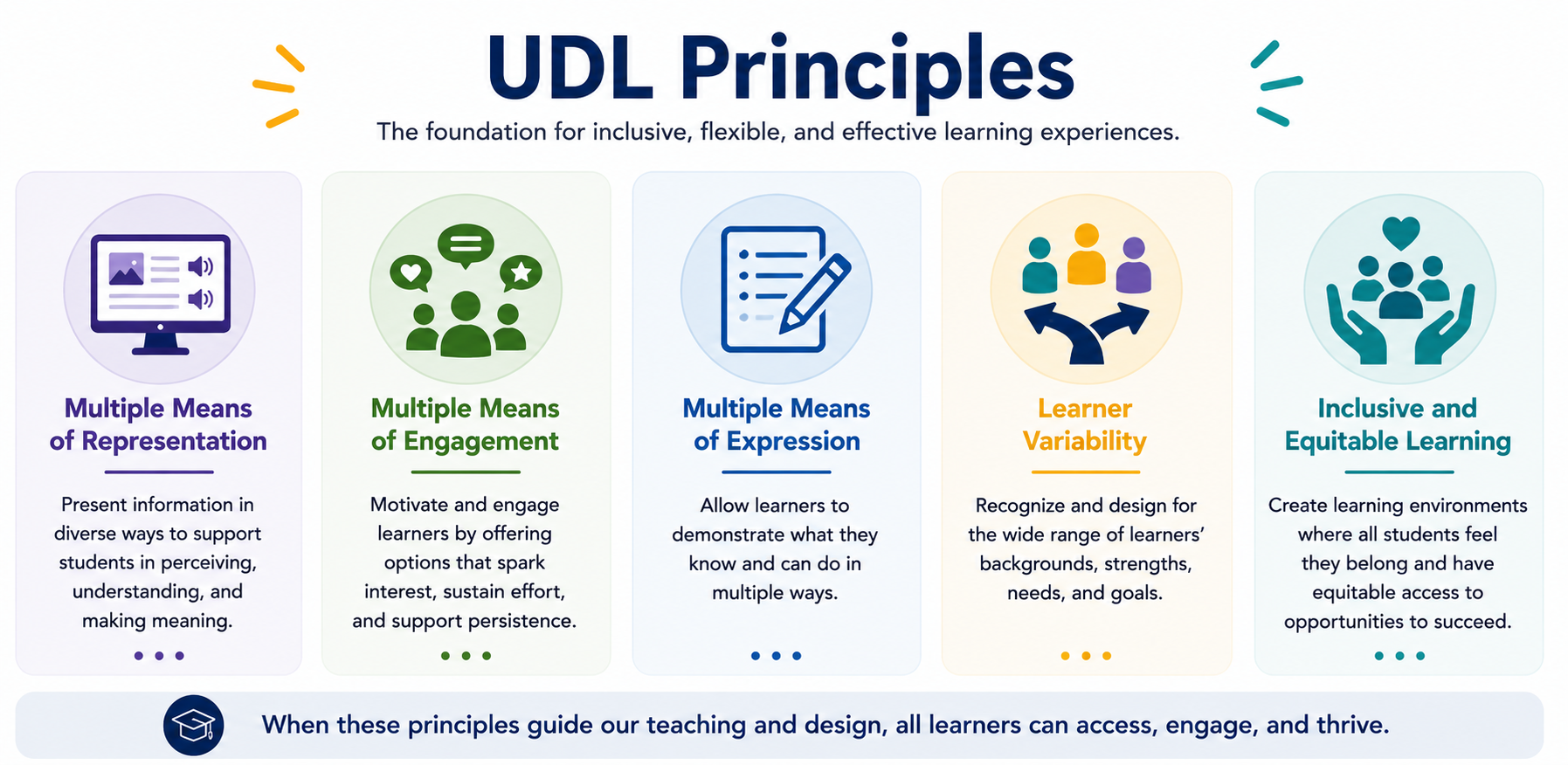
The revised Title 5 regulations encourage curriculum committees to incorporate UDL principles into course development by supporting:
- Multiple Means of Representation
- Multiple Means of Engagement
- Multiple Means of Expression
- Learner Variability
- Inclusive and Equitable Learning Experiences
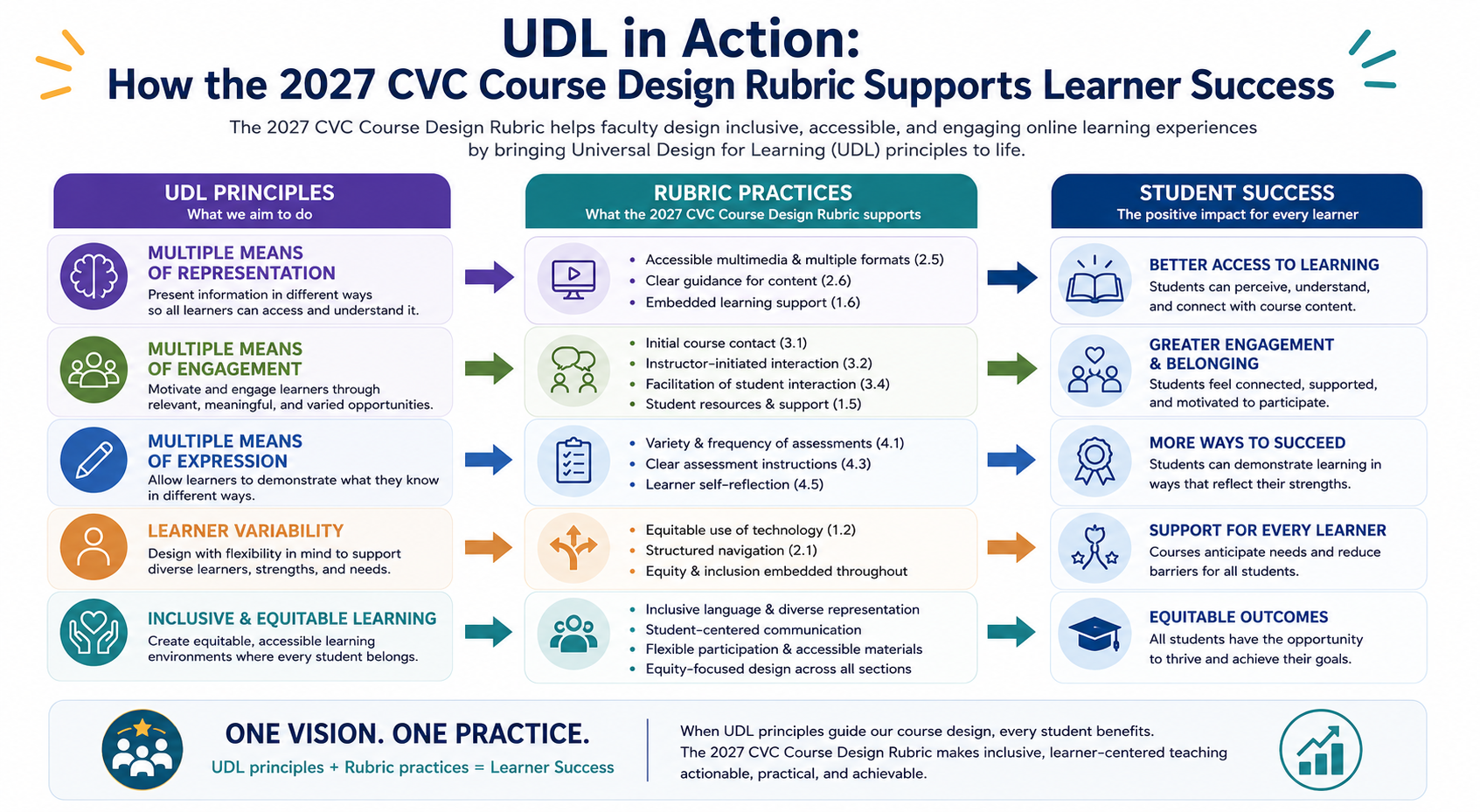
The 2027 CVC Course Design Rubric supports these same principles through practical course design strategies that help faculty create more flexible, accessible, and student-centered learning environments.
UDL in Action: How the 2027 CVC Course Design Rubric Supports Learner Success
Understanding UDL
What It Means
Learners access information in different ways. Providing multiple methods of representation helps students perceive, understand, and process course content.
How the 2027 CVC Course Design Rubric Supports This
The rubric encourages faculty to provide information in ways that support diverse learning preferences and needs.
Relevant rubric areas include:
2.5 Use of Multimedia
- Multiple content formats
- Accessible media
- Alternative ways to engage with content
2.6 Guidance for Working with Content
- Clear instructions
- Content scaffolding
- Structured support
1.6 Learning Support
- Embedded academic support
- Supplemental learning resources
Examples
- Video with captions
- Text alternatives
- Audio recordings
- Infographics
- Interactive learning materials
- Guided learning resources
Multiple content formats
Accessible media
Alternative ways to engage with content
Key Takeaway
Students benefit when important information is available through multiple pathways rather than a single format.
What It Means
Students are motivated and engaged in different ways. Courses should provide opportunities for connection, participation, and meaningful interaction.
How the 2027 CVC Course Design Rubric Supports This
The rubric encourages instructors to create engaging learning environments that foster connection and belonging.
Relevant rubric areas include:
3.1 Initial Course Contact
- Welcoming students into the course
3.2 Instructor-Initiated Interaction
- Regular instructor presence
- Ongoing communication
3.4 Facilitation of Student Interaction
- Meaningful engagement opportunities
- Community building
1.5 Student Resources and Support
- Connection to support services
Examples
- Instructor announcements
- Discussion activities
- Collaborative learning
- Choice-based learning activities
- Student support resources
- Community-building opportunities
Key Takeaway
Students are more likely to persist and succeed when they feel connected, supported, and engaged.
What It Means
Students should have opportunities to demonstrate their learning through a variety of methods.
How the 2027 CVC Course Design Rubric Supports This
The rubric encourages flexible assessment practices that allow students to show what they know and can do.
Relevant rubric areas include:
4.1 Variety and Frequency
- Multiple assessment methods
4.3 Assessment Instructions
- Clear expectations and guidance
4.5 Learner Self-Reflection
- Reflection and metacognition
Examples
- Written assignments
- Presentations
- Projects
- Discussions
- Portfolios
- Reflective activities
Key Takeaway
Learning can be demonstrated in many ways, and varied assessment opportunities provide a more complete picture of student achievement.
What It Means
Students bring different experiences, strengths, identities, backgrounds, and needs to the learning environment.
How the 2027 CVC Course Design Rubric Supports This
The rubric encourages course design that anticipates differences among learners and reduces barriers to participation.
Relevant rubric areas include:
1.2 Equitable Use of Technology
- Reducing technology barriers
1.5 Student Resources and Support
- Connecting students with support
2.1 Structure and Navigation
- Predictable course organization
Equity and Inclusion Embedded Throughout the Rubric
- Representation
- Belonging
- Inclusive design
Examples
- Flexible learning pathways
- Accessible technologies
- Consistent navigation
- Diverse examples and perspectives
- Multiple ways to participate
Key Takeaway
Designing for learner variability benefits all students, not just those who may require accommodations.
What It Means
Courses should be intentionally designed so all students can participate fully and experience a sense of belonging.
How the 2027 CVC Course Design Rubric Supports This
The rubric embeds equity and inclusion throughout all sections rather than isolating them within a single element.
Examples
- Inclusive course language
- Diverse representation
- Student-centered communication
- Flexible participation options
- Accessible course materials
- Equitable access to resources
Key Takeaway
Equity is not a separate component of course design. It is a principle that informs the entire learning experience.
Accessibility and UDL
Accessibility and UDL: Understanding the Difference
Accessibility and UDL are closely connected, but they are not the same thing.
Accessibility focuses on ensuring that course materials, technologies, and digital resources are usable by all learners and comply with applicable accessibility standards.
Universal Design for Learning (UDL) focuses on proactively designing learning experiences that anticipate learner variability and reduce barriers before they occur.
How the 2027 CVC Course Design Rubric Supports Both
The rubric supports accessibility through:
- Accessibility-minded design practices
- Equitable technology use
- Accessible multimedia
- Clear navigation and structure
- Student support resources
The rubric also supports accessibility through the optional:
Section 0: A Guided Pathway Through Course Design
This companion resource helps faculty prepare courses before review through:
- Backward Design
- Course Clean-Up
- Accessibility Plan & Remediation
Key Takeaway
Accessibility helps ensure students can access learning.
UDL helps ensure students can engage with, participate in, and demonstrate learning.
Together, they support a more inclusive learning experience for all students.
UDL in Action
The 2027 CVC Course Design Rubric does not require faculty to become UDL experts. Instead, it provides practical course design strategies that align with UDL principles and help create more flexible, inclusive, and student-centered learning experiences.
By incorporating multiple means of representation, engagement, and expression, faculty can design courses that better support the diverse learners served by California Community Colleges.
Designing for Variability. Supporting Every Learner.
The 2027 CVC Course Design Rubric helps faculty translate UDL principles into practical course design strategies that support access, engagement, belonging, and student success.
