

Accessibility: A New Approach
Accessibility has always been an important component of quality online course design. The 2027 CVC Course Design Rubric introduces a new approach that reflects the evolving accessibility landscape in higher education.
As digital accessibility requirements continue to expand through federal and state regulations, accessibility is no longer viewed solely as an online teaching consideration. Instead, accessibility is recognized as a foundational expectation that applies to all instructional materials, technologies, and digital resources used in higher education.
The 2027 CVC Course Design Rubric supports accessibility through course design practices while encouraging institutions and faculty to address accessibility proactively before a course enters the review process.
From Accessibility Review to Accessibility Readiness
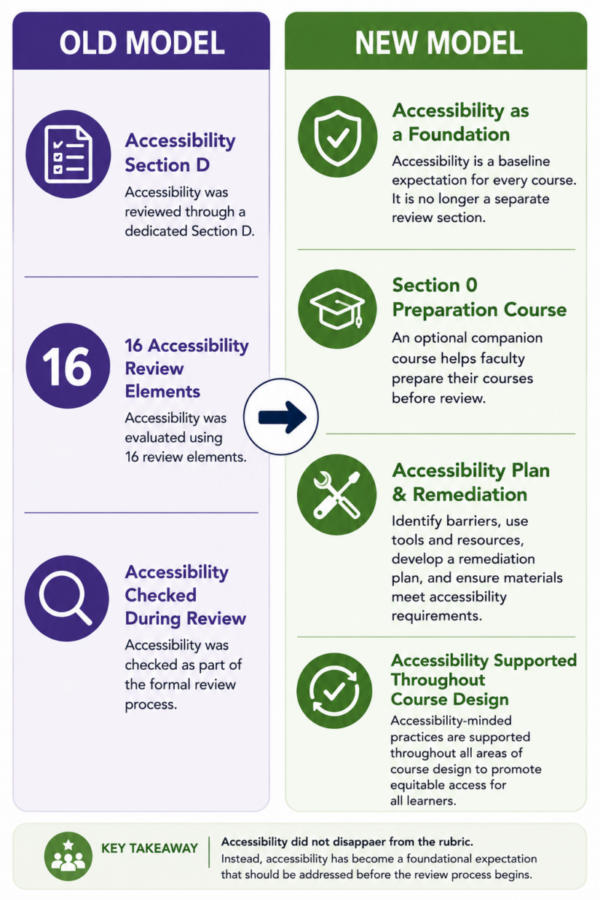
Current Rubric
Under the current rubric, accessibility was reviewed through a dedicated Section D consisting of 16 accessibility review elements. Accessibility was evaluated as part of the course review process.
2027 CVC Course Design Rubric
Accessibility is no longer a standalone rubric section.
Because accessibility is now a federal and state expectation for digital resources, the rubric no longer serves as a comprehensive accessibility review checklist.
Instead, accessibility is treated as a foundational expectation that should be addressed before a course enters review.
Key Shift
The focus has moved from:
Checking accessibility during review
to
Preparing accessible courses before review.
Accessibility did not disappear from the rubric.
In fact, accessibility remains an important component of quality course design. Accessibility-informed practices continue to appear throughout the rubric in areas such as:
- Course structure and navigation
- Multimedia
- Learning support
- Assessment design
- Equitable technology use
- Student support resources
Rather than evaluating accessibility as a separate category, the rubric encourages faculty to incorporate accessibility-minded practices throughout the course design process.
Key Takeaway
Accessibility is not a separate task added at the end of course development. It is a foundational consideration that supports equitable access for all learners.
To support faculty, the 2027 CVC Course Design Rubric includes an optional companion resource:
Section 0: A Guided Pathway Through Course Design
This adoptable course is designed to help faculty prepare their courses before a formal review.
Section 0 provides a structured process for course preparation and continuous improvement.
Step 1: Backward Design
Faculty review course outcomes and align:
- Objectives
- Content
- Learning activities
- Assessments
This step strengthens the instructional design foundation of the course.
Step 2: Course Clean-Up
Faculty review:
- Course organization
- Navigation
- Consistency
- Usability
This step helps create a more intuitive learning experience for students.
Step 3: Accessibility Plan & Remediation
Faculty:
- Identify accessibility barriers
- Use accessibility tools and resources
- Develop a remediation plan
- Improve accessibility of course materials
The goal is to support continuous improvement and accessibility readiness before review begins.
Accessibility work often involves identifying barriers and developing a plan to address them over time.
Examples may include:
- Captioning media
- Improving document accessibility
- Adding alternative text to images
- Improving heading structure
- Addressing color contrast concerns
- Reviewing third-party tools and resources
Institutions may use a variety of accessibility tools, training opportunities, and support services to assist faculty with this work.
Key Takeaway
Accessibility is an ongoing process rather than a one-time checklist.
Although accessibility is no longer reviewed through a dedicated Section D, accessibility remains an important part of course quality.
The rubric includes accessibility-minded practices throughout multiple sections and encourages faculty to design learning experiences that support equitable access.
The review process focuses on course design quality while accessibility readiness is supported through institutional accessibility efforts, Section 0 resources, and faculty remediation planning.
Key Takeaway
The removal of Section D does not reduce the importance of accessibility. Instead, it reflects a broader shift toward treating accessibility as a shared institutional responsibility and a foundational component of course development.
Frequently Asked Questions
Section D has been removed as a standalone review section. Accessibility is now treated as a foundational expectation and supported through Section 0 and accessibility-informed course design practices.
Yes. Accessibility remains a federal and state requirement and applies to instructional materials, digital resources, and technologies used in the course.
No. Accessibility remains critically important. The new approach shifts the focus from reviewing accessibility during the review process to preparing accessible courses before review begins.
Section 0: A Guided Pathway Through Course Design is an optional companion course that helps faculty prepare courses through backward design, course clean-up, and accessibility planning and remediation.
No.
Accessibility focuses on ensuring learners can access course materials and technologies.
UDL focuses on proactively designing learning experiences that reduce barriers and support learner variability.
Together, they help create more inclusive learning environments.
Accessibility as a Foundation
The 2027 CVC Course Design Rubric recognizes accessibility as a shared responsibility and an essential component of course development. By addressing accessibility through preparation, remediation, and thoughtful course design, faculty can help create learning environments that support equitable access for all learners.
