

Equity & Inclusion in the 2027 CVC Course Design Rubric
Students bring diverse experiences, perspectives, identities, strengths, and learning needs to the classroom. The 2027 CVC Course Design Rubric recognizes that effective course design should support this diversity by creating learning environments that are welcoming, inclusive, and responsive to learner variability.
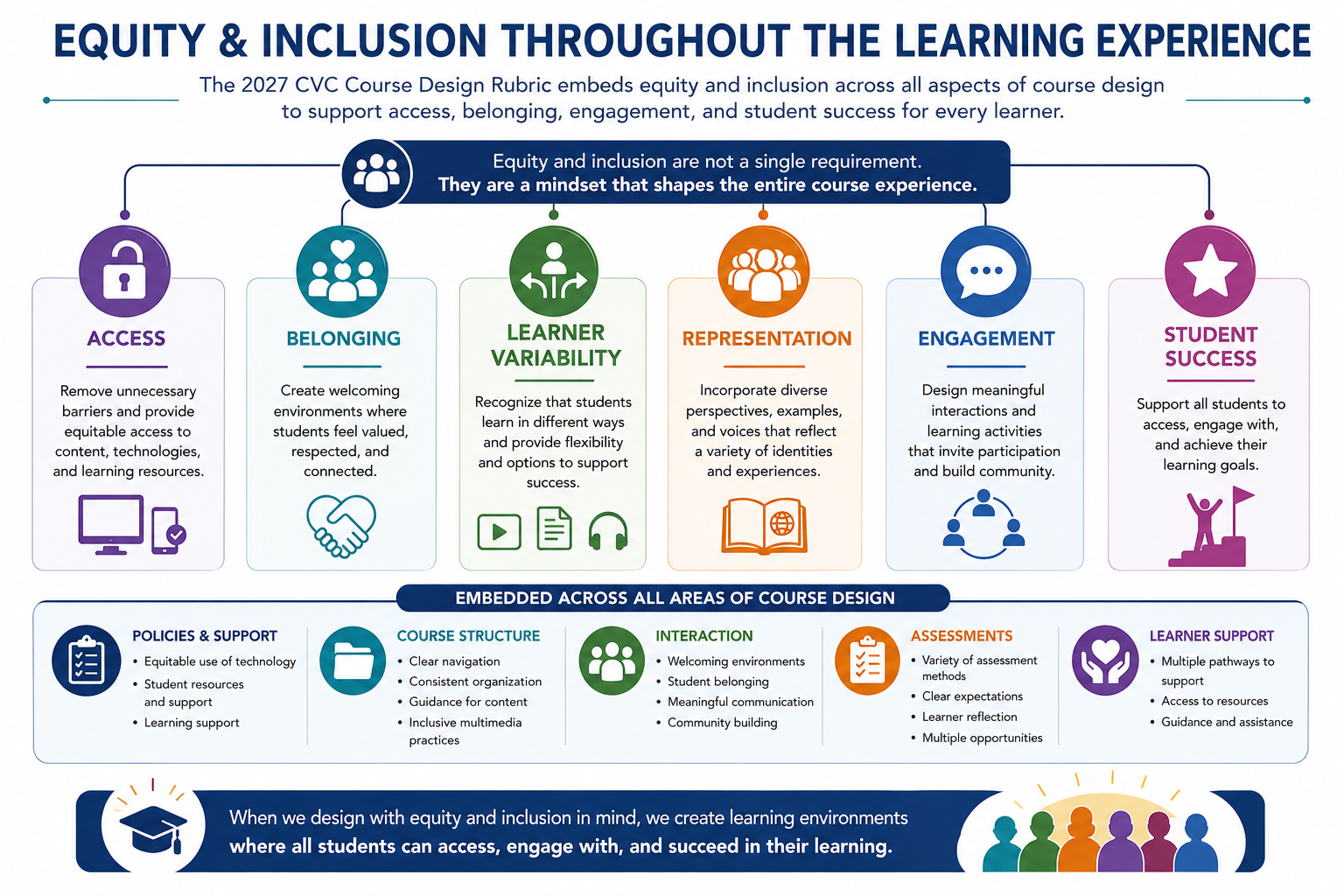
Rather than treating equity and inclusion as a single rubric element, the 2027 CVC Course Design Rubric intentionally embeds these principles throughout the course design process.
The goal is to help faculty create learning environments where all students have opportunities to access, engage with, and succeed in learning.
Current Rubric
The current rubric includes several practices that support student success and equitable learning experiences.
2027 CVC Course Design Rubric
The updated rubric places greater emphasis on equity and inclusion by integrating these principles throughout the framework.
What Changed?
The rubric encourages instructors to consider:
- Learner variability
- Representation and belonging
- Equitable access to learning resources
- Inclusive communication practices
- Flexible pathways to learning
- Student-centered course design
Key Takeaway
Equity and inclusion are not separate activities. They are considerations that influence the entire course experience.
The 2027 CVC Course Design Rubric incorporates equity and inclusion across multiple areas.
Policies & Support
- Equitable Use of Technology
- Student Resources and Support
- Learning Support
Course Structure
- Clear navigation
- Consistent organization
- Guidance for working with content
- Inclusive multimedia practices
Interaction
- Welcoming course environments
- Student belonging
- Meaningful communication
- Community building
Assessments
- Variety of assessment methods
- Clear expectations
- Learner reflection
- Multiple opportunities for demonstrating learning
Key Takeaway
Equity and inclusion are embedded throughout the learning experience rather than isolated within a single rubric element.
Students enter courses with different experiences, skills, backgrounds, interests, and learning preferences.
Designing with learner variability in mind helps create more flexible learning environments that support a broader range of students.
Examples may include:
- Multiple ways to engage with content
- Clear and consistent course organization
- Flexible learning pathways
- Varied assessment opportunities
- Multiple forms of learner support
Key Takeaway
Designing for learner variability benefits all students.
Students are more likely to engage in learning when they feel welcomed, respected, and represented within the course environment.
The rubric encourages instructors to consider:
- Inclusive language
- Diverse perspectives
- Representation within course materials
- Opportunities for connection and belonging
- Respectful learning environments
Key Takeaway
Small design choices can contribute to a stronger sense of belonging and engagement.
Important Note
The examples below are provided for illustrative purposes only.
They are intended to demonstrate ways instructors may support equity and inclusion within their courses. These examples are not required practices, prescribed approaches, or checklist items.
Institutions and instructors should determine how best to support their students within local contexts and disciplinary expectations.
Example Approach: Course Materials
An instructor intentionally includes a variety of perspectives, voices, or examples that reflect diverse experiences and viewpoints.
Example Approach: Student Support
An instructor provides multiple pathways for students to access support resources and learning assistance.
Example Approach: Communication
An instructor uses clear, welcoming language that helps students understand expectations and navigate the course successfully.
Example Approach: Assessment
An instructor incorporates varied assessment methods that allow students to demonstrate learning in different ways.
Key Takeaway
There are many ways to support equity and inclusion within a course. The rubric encourages thoughtful design rather than a single prescribed approach.
When students can access course materials, understand expectations, connect with support resources, and experience a sense of belonging, they are better positioned to engage in learning.
The 2027 CVC Course Design Rubric supports course design practices that help reduce unnecessary barriers and create more welcoming learning environments.
Key Takeaway
Equity and inclusion support student success by helping more students fully participate in the learning experience.
Frequently Asked Questions
No. Equity and inclusion are intentionally embedded throughout the rubric.
No. The rubric does not prescribe specific language or statements.
No. Faculty maintain authority over course content and instructional decisions.
No. The rubric encourages thoughtful, student-centered design practices rather than a compliance-based checklist.
The rubric recognizes that course design can influence access, engagement, belonging, and student success.
Designing Learning Environments Where All Students Can Thrive
The 2027 CVC Course Design Rubric embeds equity and inclusion throughout the course design process, encouraging learning environments that support access, belonging, engagement, and student success for a diverse community of learners.
