

Section 0: A Guided Pathway Through Course Design
The 2027 CVC Course Design Rubric introduces an optional companion resource designed to help faculty prepare courses before a formal review.
Known as Section 0: A Guided Pathway Through Course Design, this resource provides a structured process that supports course development, course improvement, and review readiness.
Section 0 is not part of the rubric review process and is not scored during review. Instead, it serves as a preparatory resource that colleges may choose to adopt and implement locally.
The goal is to help faculty identify and address common course design challenges before entering a formal review process.
Prepare Before You Review
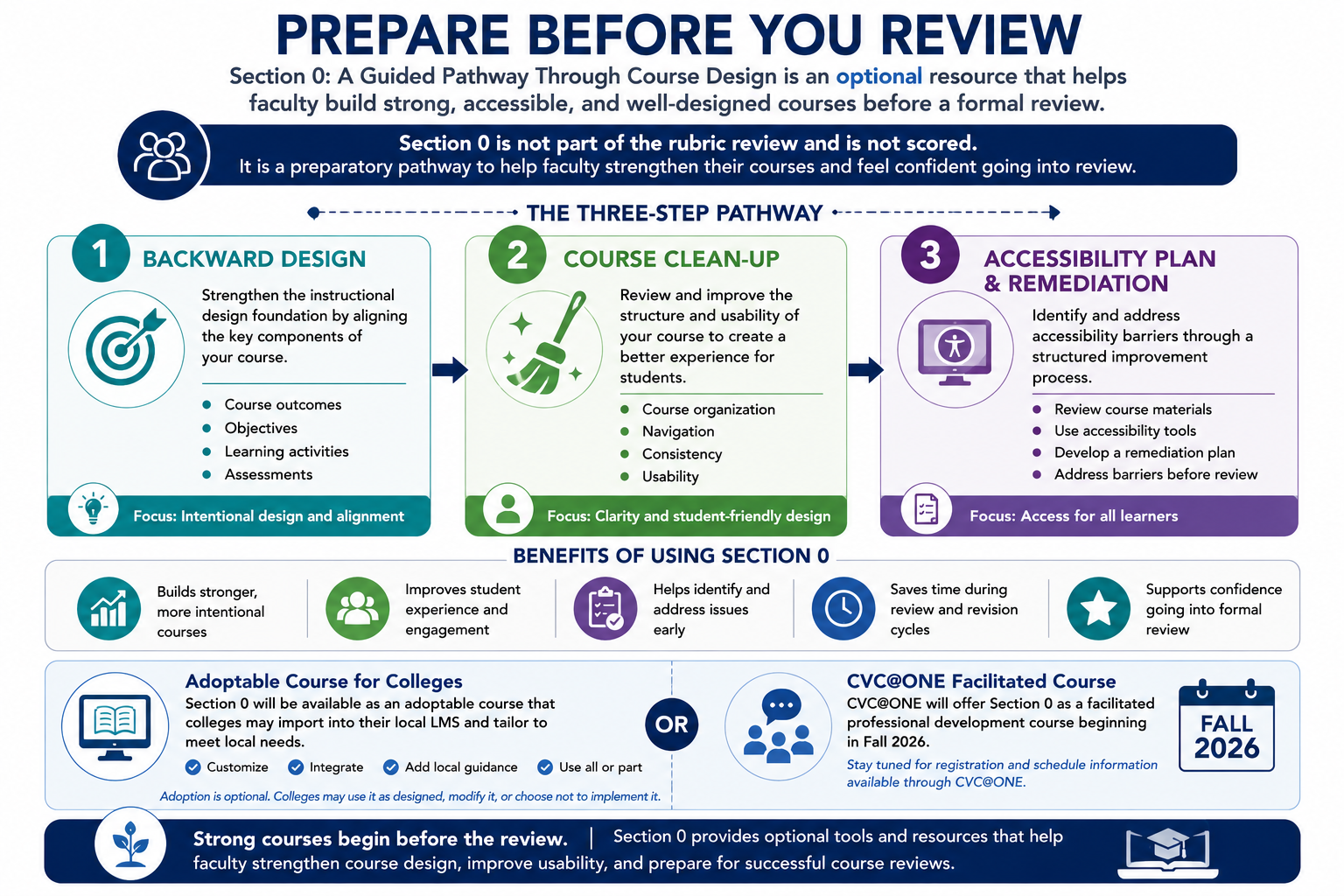
Section 0 is an optional companion resource that supports faculty in preparing courses for review.
Unlike the rubric itself, Section 0 is designed as a guided process that helps faculty evaluate and improve key areas of course design before participating in a formal review.
The resource provides a practical pathway that can be used during:
- New course development
- Course revisions
- DE Refresh processes
- POCR preparation
- Local quality review initiatives
Key Takeaway
Section 0 helps faculty prepare for review; it is not part of the review itself.
Step 1: Backward Design
Faculty review and strengthen the instructional design foundation of the course by aligning:
- Course outcomes
- Objectives
- Learning activities
- Assessments
This step focuses on intentional course design and alignment.
Step 2: Course Clean-Up
Faculty review:
- Course organization
- Navigation
- Consistency
- Usability
This step helps create a more intuitive and student-friendly learning experience.
Step 3: Accessibility Plan & Remediation
Faculty identify and address accessibility barriers through a structured improvement process.
Activities may include:
- Reviewing course materials
- Using accessibility tools
- Developing a remediation plan
- Addressing accessibility concerns before review
Key Takeaway
Together, these three steps help faculty build stronger, more review-ready courses.
Colleges have flexibility in how they use Section 0.
Potential uses include:
- New faculty preparation
- Local POCR preparation
- DE Refresh support
- Course redesign initiatives
- Professional development programs
- Self-paced faculty support
Institutions may choose to incorporate all or part of the resource into existing local processes.
Key Takeaway
Section 0 is designed to be flexible and adaptable to local needs.
Section 0 will be available as an adoptable course that colleges may choose to import into their local learning management systems.
This allows institutions to:
- Customize the resource
- Integrate local processes
- Add institution-specific guidance
- Support local professional development efforts
Adoption of Section 0 is optional.
Colleges may use the resource as designed, modify it to meet local needs, or choose not to implement it.
Key Takeaway
Section 0 is a resource available to colleges, not a requirement of the rubric.
In addition to the adoptable course, CVC@ONE will offer Section 0 as a facilitated course beginning in Fall 2026.
The facilitated offering will provide faculty with guided support as they work through the three-step pathway and prepare courses for review.
Additional information regarding registration and course schedules will be available through CVC@ONE.
Key Takeaway
Faculty may access Section 0 through their local institution or through CVC@ONE professional development opportunities.
Frequently Asked Questions
No. Section 0 is an optional companion resource.
No. Section 0 is designed to support course preparation before review.
No. Section 0 is not evaluated as part of the rubric review process.
Yes. The adoptable course is intended to be flexible and may be adapted to meet local needs.
No. Adoption is completely optional.
Yes. CVC@ONE plans to offer a facilitated Section 0 course beginning in Fall 2026.
Strong Courses Begin Before the Review
Section 0: A Guided Pathway Through Course Design provides optional tools and resources that help faculty strengthen course design, improve usability, and prepare for successful course reviews.
